Year One at Google

I wanted to post this at least a month ago, but I’ve decided to give myself permission to be a bit tardy. I just completed my first year at Google in December. While I expected to grow technically, I didn't expect to grow even more as a rounded person.
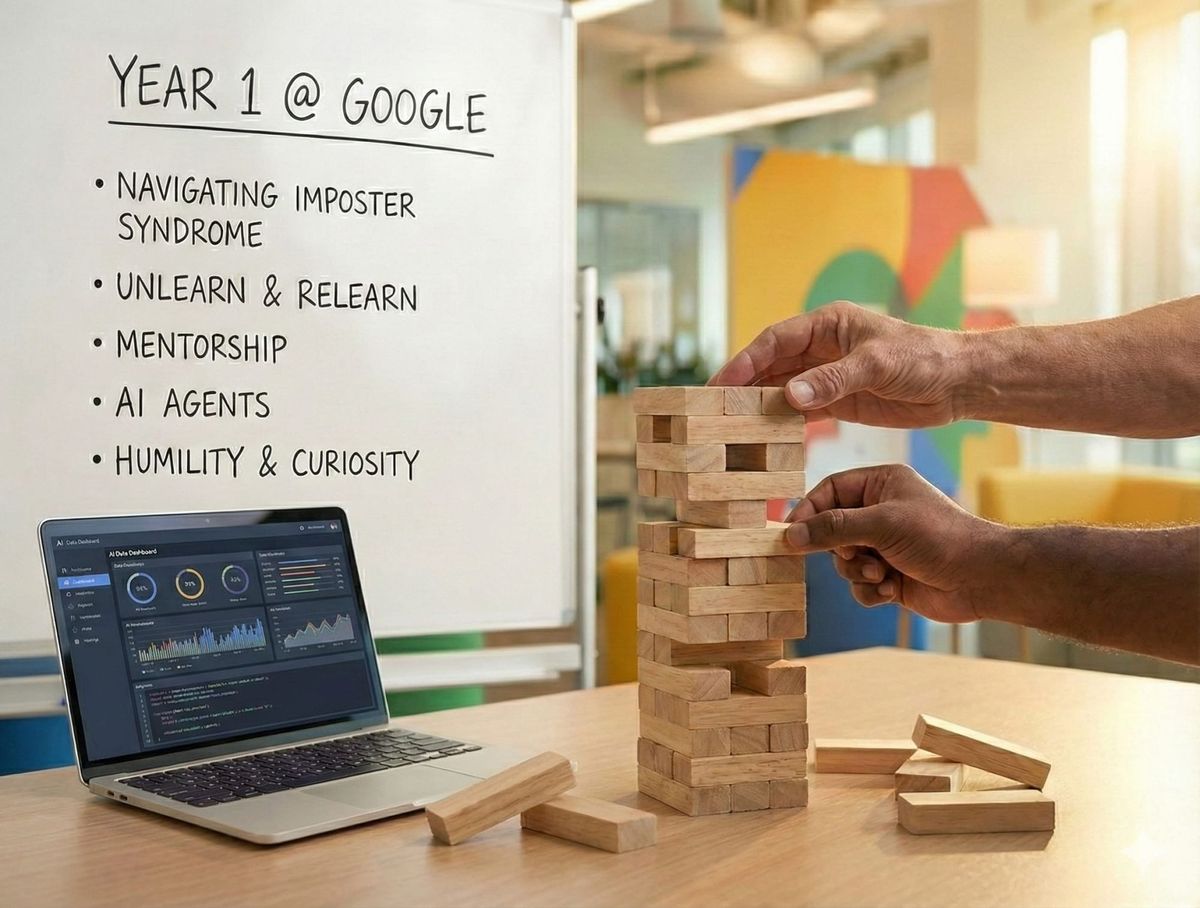
2025 was my best year yet - not because of what I learned, but because of what I had to unlearn & relearn. My biggest learning? 𝗡𝗮𝘃𝗶𝗴𝗮𝘁𝗶𝗻𝗴 𝘁𝗵𝗲 𝗜𝗺𝗽𝗼𝘀𝘁𝗼𝗿 𝗦𝘆𝗻𝗱𝗿𝗼𝗺𝗲.
During the "Google Technical Immersion" (GTI), they show Nooglers (New Googlers) a roller coaster graph. It goes something like this:
• The High: The excitement of the new chapter, campus perks, etc
• The Dip: The crushing weight of internal tools, cross references, massive codebases & brilliant colleagues who seem to know everything
• The Rise: The phase where you tackle one small part of the ecosystem, leverage support from colleagues, and start contributing meaningfully
My "dip" came immediately. But my "baby project" (a project provided to Nooglers to get their feet wet) didn't just quell the dip; it helped me enjoy the ride. It was a project to figure out sample sizes for a model evaluation. The catch? We had absolutely no data to work with - just a few abstract parameters. For a Data Scientist, this felt like sending a soldier to war with nothing but a foldable stick in their backpack.
This is where the art of seeking mentorship comes in. It is particularly hard, if you are an introvert like me. I lucked out; I met my mentor organically, and I am so grateful for everything I learned. The most important lesson wasn't technical. It was this: "𝗜 𝘄𝗶𝗹𝗹 𝗻𝗲𝘃𝗲𝗿 𝗯𝗲 𝘁𝗵𝗲 𝘀𝗺𝗮𝗿𝘁𝗲𝘀𝘁 𝗽𝗲𝗿𝘀𝗼𝗻 𝗶𝗻 𝘁𝗵𝗲 𝗿𝗼𝗼𝗺." I will never know everything about an organization as large as Google (or the world in general).
And that is okay.
It made me realize that in the age of AI, the goal isn't necessarily to know the most. It’s to navigate the flow and adapt the quickest. I am genuinely excited about what I’m learning. I’ve moved beyond just looking at simple metrics like "Precision" and "Recall" (more on that here: The Four Tenets of Model Evaluation - https://www.linkedin.com/pulse/four-tenets-model-evaluation-i-wish-knew-sooner-my-vijayaraghavan-ilunc) to understanding the nuances of human satisfaction. For example, does a 5-star scale actually capture what a user feels, or is a simple "Thumbs Up/Down" more honest? I thought I knew the answer based on my stats and simulations, but technical discussions with my colleagues challenged me left and right. And here's the kicker: 𝗜 𝗵𝗮𝘃𝗲 𝗻𝗲𝘃𝗲𝗿 𝗳𝗲𝗹𝘁 𝗵𝗮𝗽𝗽𝗶𝗲𝗿 𝘁𝗼 𝗯𝗲 𝗽𝗿𝗼𝘃𝗲𝗻 𝘄𝗿𝗼𝗻𝗴. Because when someone challenges you (respectfully, of course), it means that they care. They want you to grow. And I did—as a person as much as a Data Scientist.
I’m also diving deep into "Agents" - I now have my own personal staff who does research for me. Also, if you haven't used NotebookLM yet, please do. This wonder tool feels like it is miles into my dream of having a "Universal Teaching Machine," which I was musing about (https://www.linkedin.com/pulse/we-need-universal-teaching-machines-much-do-learning-vijayaraghavan) just a year and a half back. I'm so fortunate to be living, learning, and relearning during these times.
Grateful for a wonderful 2025. Excited for 2026. If I can keep this balance of humility, curiosity, and protected personal space, I think I’ll be just fine.
Even if my blog posts are a month late.
Originally published on LinkedIn.